
Gentlemen,
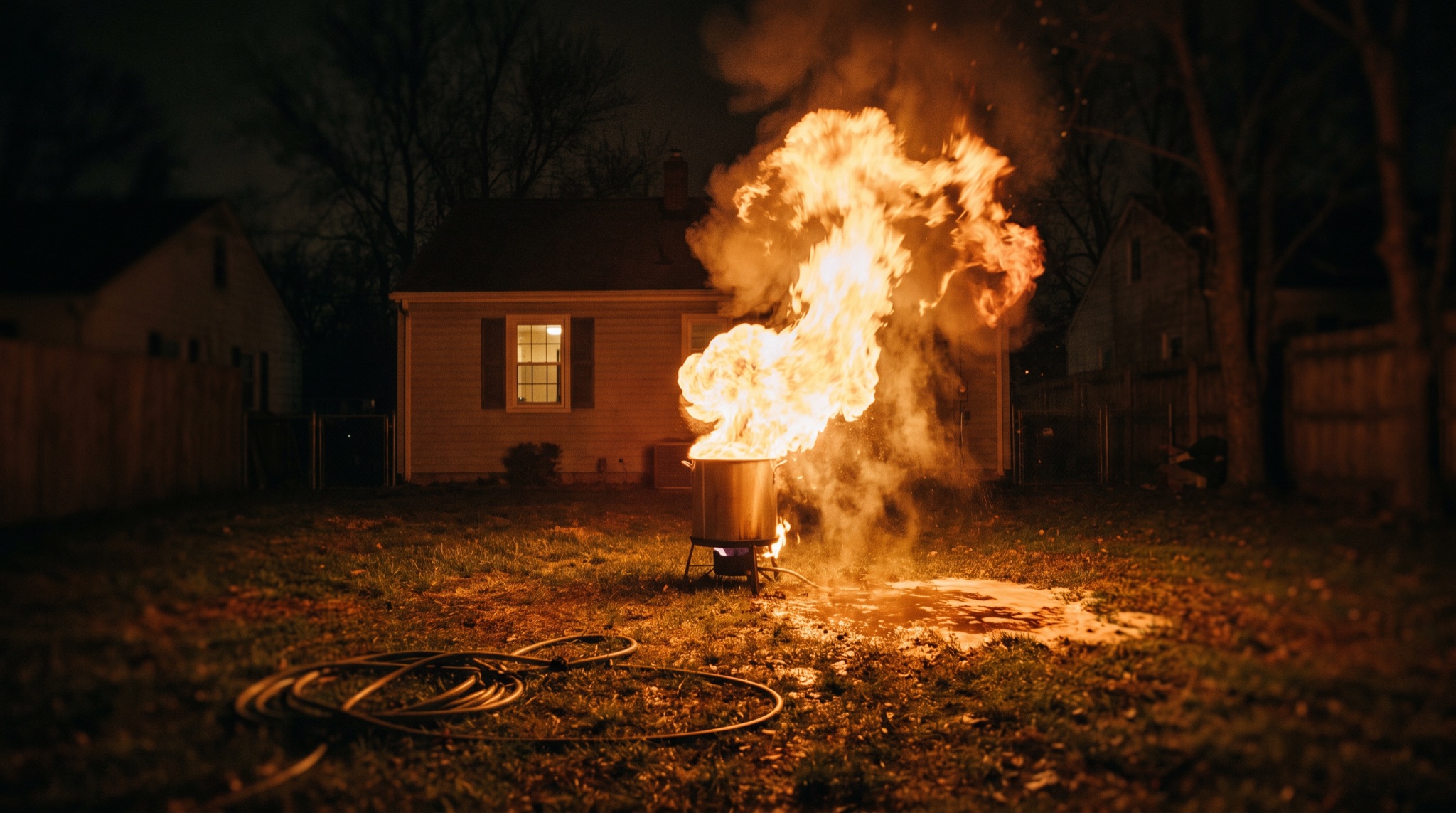
A fried turkey is the best bird you will ever eat: brown and crackling outside, wet inside, done in under an hour while the oven stays free for the pies. It is also the reason every local news station keeps a clip of a man in a driveway, a pot of oil and a fireball as tall as the garage.
The two men did the same job. One of them did six things before the oil got hot. Here they are.
Rule one: the bird is thawed and dry
Ice and 350-degree oil do not mix. The water in a half-frozen bird turns to steam the second it hits the oil, the oil climbs out of the pot, and the burner is right there waiting for it. Thaw it in the refrigerator, about 24 hours for every five pounds (that is the National Turkey Federation's number). A 15-pound bird for Thursday goes in the fridge on Sunday.
On the day, pull the neck and the bag of giblets out of the cavity and pat the whole thing dry, inside and out. Skip the wet marinade on the skin. A smaller bird fries better and fits the pot; read your fryer's limit before you buy.
Rule two: measure the oil with water
The day before, put the bird in the empty pot and add water until it is covered. Take the bird out. The line the water sits at is your oil line, so mark it. Dump the water and dry the pot until it is bone dry.
This is the step men skip, and it is the step that matters most. Too much oil plus one turkey equals oil on the ground, and oil on the ground plus a flame equals the clip on the news. Use an oil that can take the heat: peanut is the classic (ask the table about allergies first), canola works too.
Rule three: outside, and away from everything
The fryer goes outdoors, on flat ground, at least ten feet from the house. Never in the garage, never on the wooden deck, never under the eaves or a carport, and never in the rain or snow. It does not matter that the garage door is open. Kyle B. tried that this month "for ventilation," and the jury has opinions.
Rule four: the burner is off when the bird goes in
Heat the oil to 350. Then turn the burner off. Gloves on, long sleeves, and lower the bird slowly on the hook so the oil has time to settle. Once it is in and calm, light the burner again and hold the temperature.
Cooking time is on your fryer's instructions, a few minutes per pound for most of them, but the clock is a guess and the thermometer is the answer. The bird is done at 165 degrees in the thickest part of the breast. Burner off again to lift it out.
Rule five: somebody stays with it
The man at the fryer does not go inside for kickoff or run to the garage for the folding chairs. He stands there with a thermometer the whole time. Kids and the dog stay well back, and so does the brother-in-law with advice. This is the one job on Thanksgiving where the man in charge waits on his second beer until the bird is out.
Rule six: the extinguisher, and never water
An all-purpose fire extinguisher sits within reach before the burner is lit, and you know how to work it. Water on a grease fire throws burning oil across the yard. If it catches, turn the burner off if you can reach it safely, back away and call 911. The house is worth more than the bird.
After dinner, the oil stays dangerously hot for hours. The pot stays where it is until it cools.
Do it this way and you carry a brown, crackling bird across the yard while the whole family watches from the window. Do it the other way and you end up on the Revoked Report next to Kyle, and Thanksgiving has a docket of its own going back to 2012.
So here is the question for the members. Who fries at your house, and has anyone ever needed the extinguisher? Tell us in the comments. And if the man at the fryer is doing all this without a card in his wallet, put his name on one.
Stay Manly My Friends...
·· Comments
Comments are for members. Sign in and have your say.
Sign in to comment